Regenerative Medicine SEO for Clinics That Rank Without Making a Claim
The FDA has been sending warning letters to stem cell and exosome clinics for years, and it has not stopped. Regenerative medicine SEO has to work inside that boundary, not around it.

Many stem cell and exosome products used in regenerative medicine are not FDA-approved, and the FDA has issued warning letters to clinics making unsubstantiated treatment claims about them. This page covers SEO and marketing services for regenerative medicine clinics, it is not medical advice, and no treatment outcome is guaranteed.
The FDA Has a Real Enforcement History Here
The pattern is consistent. Unapproved products get marketed with disease-treatment or cure claims that the science does not support.
General marketing agencies write "stem cells can treat X" content without checking current FDA guidance, and that puts your medical practice at real regulatory risk. That is a worse marketing approach than weak copy.
Content for Regenerative Medicine That Stays Inside What Is Approved
I check current FDA guidance on regenerative medicine products before I write or optimize any page. Every claim tied to a specific product or treatment gets that check.
The pages cover what your clinic actually offers, which regenerative treatments are approved versus investigational, and what the research supports. Not content marketing that reads well but does not hold up.
Why Regenerative Medicine Marketing Is Harder Than It Looks
Google and Meta ads for stem cell therapies get disapproved under their healthcare policies, and the clinics that lean on paid advertising spend their ad spend re-submitting marketing campaigns. That leaves organic search as the one digital marketing channel most regenerative medicine practices can rely on.
The second problem for any marketing strategy here is trust. Patients researching regenerative treatments have read the warning letters too, and stem cell patients in particular arrive skeptical, so the page has to build trust with sourcing and a named provider before it asks for anything.
How Compliant Pages Still Rank
Answer-first structure, a named licensed provider, and a visible disclosure do the ranking work. Google's quality raters look for exactly those signals on a health page, and that is how compliant pages can rank without carrying the enforcement risk.
Explaining what PRP therapy is and who it is for is citation-worthy patient education, and it is how compliant clinics connect with patients who are still deciding. Promising it will fix a knee is not.
Keyword Research for a Cash-Pay Practice
Cash-pay regenerative medicine patients search differently from insured ones: by therapy name, by condition, and by city, and they compare clinics across state lines. Keyword research here means finding the terms those patients who are actively researching use, then matching a page to each.
That gives you a service page per treatment, an educational content layer that answers the questions before the consult, and a location layer for the map pack, which together form the patient acquisition system. Regenerative medicine SEO is mostly structure, sourcing and technical SEO, not tricks.
Local Search for Regenerative Medicine and Stem Cell Practices
Patients search these treatments by name and by city. Google Business Profile optimization and your service-area pages need to match the treatments you actually offer.
Reviews help your marketing efforts, as long as they stay factual. A review that claims a cure is a liability, not a trust signal.
Does Your Name Come Up When a Patient Asks an AI Assistant
More patients actively seeking regenerative treatment ask an assistant before they ever open Google. They get a handful of names back and they contact one of them.
I ask ChatGPT, Claude, Perplexity and Gemini the questions your patients actually ask, and I show you every answer word for word, plus everyone named instead of you.
How Success Is Measured
The metric that matters is qualified patient enquiries from search, not website visitors. I report on ranking, on which pages produce consults, and on the lifetime value of a regenerative patient against what the SEO costs, so the ROI is visible.
I evaluate every page each quarter. A page that ranks but never produces a consult gets rewritten or merged, because practice growth is the point, not the graph.

Where this page's claims come from
One path, four steps
Start with a free scan, add a Blueprint if you need the map. Run a Sprint when you are ready to build.
Free AI Visibility Check
One visibility gap, one commercial opportunity, one recommended next step. Written or on a short Loom, inside three business days.
FreeSearch Growth Blueprint
The full Google and AI baseline, a commercial query map, money-page architecture and a 90-day roadmap. Ten real findings or you do not pay.
$1,497 once90 Day Search Growth Sprint
The core engagement. Commercial pages built, trust layer fixed, AI search optimised, tracking wired, milestones agreed in writing.
$3,000 a month, 3 monthsSearch Growth Retainer
After the Sprint, if the economics justify it. Expansion, citation monitoring, authority and reporting against leads, not just rankings.
From $3,000 a monthThe 30-Day Implementation Guarantee
Before a Sprint starts, we agree the first 30 days of implementation milestones and acceptance criteria in writing. If I miss an agreed milestone for a reason inside my control, the management fee stops accruing from Day 31 until that work is complete, and I keep working on it.
Prepaid fees are credited pro rata against the next invoice, or refunded if there is no next invoice. Delays from missing access, late approvals, scope changes or third parties move the dates by agreement, and the milestone document names who signs off on each item.
This guarantee covers what I do. It does not promise rankings, traffic, AI citations, leads or revenue.
More in Longevity and Regenerative SEO
Questions I get asked first
Is it legal to offer stem cell treatments?
Many products used are legal to offer, but the FDA restricts disease-treatment claims for unapproved products. I keep content inside that boundary.
Will you write "stem cells cure X" content?
No. That is exactly the claim pattern the FDA has issued warning letters over, so I write what the current evidence actually supports.
Can a regenerative clinic run Google Ads?
Sometimes, and it is unreliable. Google restricts ads for unapproved treatments and reviews them case by case, so I treat paid ads as a supplement to SEO rather than the foundation.
Should we still run ads if we are investing in SEO?
If the account is stable, yes. SEO and paid work together when the landing pages already rank, and the organic side is what remains when the ad account is paused.
Is SEO for stem cell and PRP clinics different from other medical marketing?
Yes. Most healthcare marketing can describe outcomes within the approved labeling, while regenerative therapies are largely investigational, so the content has to attract patients without a single outcome claim.
Do you replace our marketing agency?
Only for search. A digital marketing agency that runs your ads and social can keep doing that, and I handle organic and AI-assistant visibility alongside them.
How long does SEO take to generate patients for a regenerative clinic?
Months, not weeks. SEO strategies here are cumulative: technical fixes show up first, and the content and trust work needs a few months before rankings move.
Do you check FDA guidance before writing?
Yes, every time, for every claim tied to a specific product or treatment.
Can a compliant page still compete with clinics that make big claims?
Yes. Sourced, provider-authored pages are what Google's quality raters are told to reward and what AI assistants can safely cite, who carry the enforcement risk.
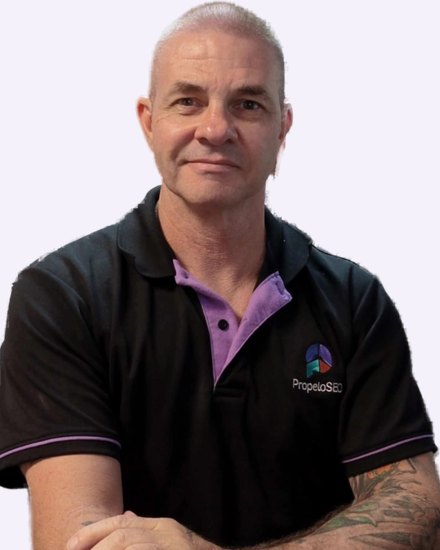
Shane Hellmrich
I designed the methodology and I review every client's strategy myself. Twelve years in YMYL search, twenty-five years around health, and a habit of reading the FDA list before writing a headline.
See what search could be sending you.
Five checks a week, three business days, one honest recommendation. No card, no pitch deck.
Nothing on this site is medical advice. Rankings and leads are not guaranteed. The work is.